
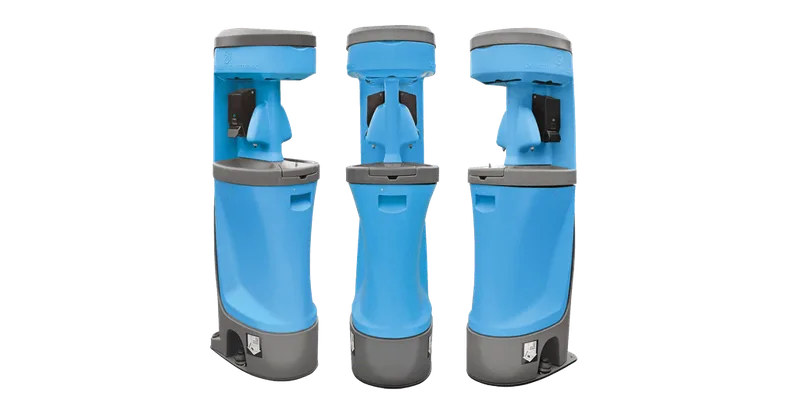
Decide where people need to wash
Start with the activity: using toilets, taking a meal break or moving between work and eating. Put washing into that actual routine so people do not have to search for it after leaving the restroom.
Describe peak use and whether the station will be shared by different groups. Ask about the actual station configuration and how its capacity relates to the proposed visit schedule. A sink image does not tell you how long its supplies will last at your event.
Assign the supply checks
Clarify who checks water, soap, towels and the condition of the station during use, and who performs replenishment or servicing. Scheduled provider care and the organizer's between-visit observations are different responsibilities.
Know how to report a depleted or malfunctioning station and what arrangement users should follow while a problem is addressed. Keep the approach clear of bins and stored supplies. Do not connect equipment, refill it from an unsuitable source or discharge collected water without provider instructions.
Keep other water jobs separate
A guest handwashing station is not a universal sink for washing dishes, cleaning tools or emptying drinks. Identify those activities separately when planning a food service, craft programme or worksite.
Georgia's portable sanitation rules address potable water for servicing handwashing units and marking reservoirs against drinking. Treat the station as the specified washing equipment, not a drinking-water dispenser. Confirm any food-service-specific requirements with the responsible organizer or authority rather than assuming this rental answers them all.
Questions before you book
Is hand sanitizer the same as a handwashing station?
No. It does not provide the same water, soap and towel arrangement. Explain the intended use and request the appropriate washing provision.
Who replenishes the supplies?
That should be stated in the order and on-site responsibilities. Ask what happens between scheduled visits and how extra care is requested.